Bathing in herbal preparations is one of the oldest forms of hydrotherapy. From the Roman thermae infused with lavender and rosemary to the Japanese tradition of yomogi-yu (mugwort baths), cultures around the world have recognized that immersion in warm, herb-infused water does more than clean the body — it relaxes muscles, opens airways, calms the nervous system, and supports the skin as an organ of absorption.
Modern research supports many of these traditional observations. A 2018 study in Evidence-Based Complementary and Alternative Medicine found that warm water immersion (40 degrees C for 20 minutes) significantly reduced cortisol levels and self-reported stress. The addition of essential oils via the bath water provides dual delivery: transdermal absorption through the skin and inhalation of volatile compounds through the steam.
These four recipes cover the most common therapeutic goals — muscle recovery, respiratory support, nervous system calming, and circulatory/detox support. Each one includes exact essential oil quantities, safety precautions, and practical tips.
Important: Essential Oil Bath Safety
Essential oils do not dissolve in water. If you add drops of essential oil directly to bath water, they will float on the surface and make direct, undiluted contact with your skin — potentially causing irritation or chemical burns, especially with "hot" oils like eucalyptus, peppermint, and cinnamon.
You must always disperse essential oils before adding them to a bath. The safest methods:
Epsom salt or sea salt: Mix essential oils into 1-2 cups of salt and stir well. The crystalline structure of the salt helps disperse the oils throughout the water.
Carrier oil: Mix essential oils into 1 tablespoon of carrier oil (jojoba, sweet almond). This creates a bath oil that disperses reasonably well.
Whole milk or cream: The fat in dairy acts as an emulsifier. Mix essential oils into 1/4 cup whole milk before adding to the bath.
Polysorbate 20: A food-grade emulsifier that fully disperses essential oils in water. Use 1 teaspoon per 5 drops of essential oil. This is the professional aromatherapy approach.
For full dilution guidelines, see our Essential Oil Dilution Guide.
Recipe 1: Muscle Recovery Bath Soak
For post-workout soreness, tension, and general muscle fatigue
This recipe combines Epsom salt (magnesium sulfate) with arnica-infused oil and warming essential oils. While the scientific evidence for transdermal magnesium absorption through Epsom salt baths is still debated — a 2017 systematic review in Nutrients found the evidence "preliminary but promising" — the warm water immersion itself reliably reduces muscle tension, improves local blood flow, and decreases pain perception. Arnica (Arnica montana) has been studied for its anti-inflammatory sesquiterpene lactones (helenalin), and a 2024 systematic review in Plants found positive effects of both phytotherapeutic and homeopathic arnica formulations on traumatic injuries and inflammatory conditions.
Ingredients
2 cups Epsom salt (magnesium sulfate)
1/2 cup baking soda (softens water, soothes skin)
5 drops eucalyptus essential oil (Eucalyptus globulus) — anti-inflammatory, opens airways
4 drops lavender essential oil (Lavandula angustifolia) — muscle-relaxant, calming
3 drops rosemary ct. camphor essential oil (Rosmarinus officinalis) — stimulates local circulation, mild analgesic
2 drops black pepper essential oil (Piper nigrum) — warming, improves blood flow to sore areas
1 tablespoon arnica-infused carrier oil (or plain sweet almond oil if arnica is unavailable)
Optional: 1/4 cup dried arnica flowers in a muslin bag, steeped in the bath water
Method
Mix the essential oils into the Epsom salt in a bowl, stirring thoroughly to disperse.
Add the baking soda and arnica oil. Stir to combine.
Run a warm bath (100-104 degrees F / 38-40 degrees C). Water that is too hot can actually increase inflammation in acutely sore muscles.
Add the salt mixture under running water to help it dissolve and disperse. If using a muslin bag of dried arnica, place it in the bath and let it steep.
Soak for 20-30 minutes. Focus on deep, slow breathing to engage the parasympathetic nervous system.
After the bath, rinse briefly with lukewarm water to remove salt residue. Pat dry gently.
Safety: Do not use arnica on broken skin, open wounds, or raw abrasions — arnica can cause contact dermatitis on damaged skin. Eucalyptus and rosemary essential oils should not be used in baths for children under 6. Those with very sensitive skin should reduce essential oil drops by half. If you are pregnant, omit the rosemary essential oil. Check our Essential Oil Interaction Checker for medication concerns.
Recipe 2: Sinus-Clearing Steam Blend
For congestion, sinus pressure, and upper respiratory discomfort
Steam inhalation is one of the most direct ways to deliver essential oils to the respiratory tract. The warm, moist air opens nasal passages and bronchioles, while volatile aromatic compounds (primarily 1,8-cineole from eucalyptus and menthol from peppermint) interact with cold-sensitive receptors in the nasal mucosa, creating a sensation of airflow even before physical decongestion occurs. A 2023 review in Molecules confirmed the bronchodilatory, anti-inflammatory, and mucolytic properties of 1,8-cineole.
Ingredients
A large, heat-safe bowl
4-6 cups freshly boiled water
3 drops eucalyptus essential oil (Eucalyptus globulus or E. radiata)
2 drops peppermint essential oil (Mentha x piperita)
1 drop tea tree essential oil (Melaleuca alternifolia) — antimicrobial support
Optional: 1 drop rosemary essential oil
A large towel
Method
Pour freshly boiled water into the bowl. Let it cool for 1-2 minutes — you want steam, not scalding vapor.
Add the essential oil drops to the water.
Drape a towel over your head and the bowl, creating a tent that traps the steam.
Close your eyes (essential oil vapors can sting the eyes) and breathe deeply through your nose for 5-10 minutes. If the steam feels too intense, lift the towel edge to let cooler air in.
Rest afterward. Blow your nose gently. Repeat up to 3 times daily during acute congestion.
For those without a bathtub — Shower Steam Alternative: Place 2-3 drops of eucalyptus and 1-2 drops of peppermint on a washcloth and hang it from the showerhead (not directly in the water stream). The steam from the hot shower will volatilize the oils. Alternatively, make shower melts (see below).
DIY Sinus Shower Melts
1 cup baking soda
1/3 cup water (add gradually)
10 drops eucalyptus essential oil
5 drops peppermint essential oil
3 drops tea tree essential oil
Mix baking soda and water to a thick, damp-sand consistency. Stir in essential oils. Pack firmly into silicone molds. Let dry for 48 hours. Place one melt on the shower floor (away from the direct stream) and let the steam activate it.
Safety: Do not use eucalyptus or peppermint steam for children under 6 — menthol and 1,8-cineole can cause laryngospasm in young children. Substitute with lavender and Roman chamomile for children. Keep eyes closed during steam inhalation. Asthmatics should use caution — strong essential oil vapors can trigger bronchospasm in some individuals.
Recipe 3: Calming Lavender-Chamomile Bath Soak
For anxiety, nervous tension, and difficulty unwinding
This is the gentlest bath in this collection, designed for sensitive individuals, evening relaxation, or anyone experiencing anxiety or nervous system overactivation. A 2020 randomized controlled trial in the Journal of Korean Academy of Nursing found that lavender-infused baths significantly reduced anxiety and improved sleep quality compared to plain warm water baths.
Ingredients
1 cup Epsom salt
1/2 cup colloidal oatmeal (finely ground oats — profoundly soothing for irritated or sensitive skin)
5 drops lavender essential oil (Lavandula angustifolia)
3 drops Roman chamomile essential oil (Chamaemelum nobile)
1/4 cup whole milk or 1 tablespoon carrier oil (to disperse essential oils)
Optional: a muslin bag filled with 1/4 cup dried chamomile flowers and 2 tablespoons dried lavender buds
Method
Mix essential oils into the milk or carrier oil.
In a separate bowl, combine Epsom salt and colloidal oatmeal.
Run a warm bath (98-102 degrees F / 37-39 degrees C) — slightly cooler than the muscle recovery bath. A bath that is too hot can be stimulating rather than calming.
Add the salt-oatmeal mixture and the essential oil blend to the running water.
If using the herbal muslin bag, hang it under the faucet while the tub fills, then drop it into the bath to continue infusing.
Soak for 20-30 minutes. Dim the lights. Put your phone away. Deep breathing amplifies the calming effects.
Safety: This is the safest bath recipe in this collection and is appropriate for most people, including pregnant women (omit essential oils in the first trimester and keep water below 100 degrees F), elderly individuals, and those with sensitive skin. The oatmeal forms a protective, soothing film over the skin. Suitable for children ages 6+ at half the essential oil amount.
Recipe 4: Ginger Detox Bath
For circulatory support, cold extremities, and gentle warming
Ginger baths are a staple of traditional Japanese and Ayurvedic bathing practices. Fresh ginger in bathwater increases peripheral circulation, opens pores, promotes sweating, and creates a deep warming sensation that persists after the bath. The primary active compounds — gingerols and shogaols — are potent anti-inflammatory agents with well-documented effects on NF-kB pathways. A 2020 meta-analysis in Food Science & Nutrition confirmed ginger's systemic anti-inflammatory effects, and the topical warming effects during bathing are supported by centuries of traditional use.
Ingredients
1 cup Epsom salt
1/2 cup baking soda
1/4 cup bentonite clay (draws impurities from the skin; mix with water separately before adding to the bath — do not use metal utensils with bentonite)
2 inches fresh ginger root, grated or thinly sliced
4 drops ginger essential oil (Zingiber officinale)
3 drops lemon essential oil (Citrus limon) — uplifting, supports liver function via aroma
2 drops juniper berry essential oil (Juniperus communis) — traditional "purifying" oil in European herbalism
Method
Mix the essential oils into the Epsom salt.
In a separate container, mix bentonite clay with 1/2 cup warm water until smooth. (Important: use a wooden or plastic spoon. Metal deactivates bentonite's binding properties.)
Run a warm bath (102-104 degrees F / 39-40 degrees C). This bath is intentionally warmer to promote sweating.
Add the salt mixture, the bentonite slurry, and the fresh ginger to the running water.
Soak for 15-20 minutes. You will begin to sweat — this is the desired effect. Have a glass of water nearby and stay hydrated.
After the bath, rinse with lukewarm water to remove any clay or salt residue. Wrap in a warm towel and rest for at least 10-15 minutes. The warming effect continues for 30-60 minutes after the bath.
Safety: This bath is not appropriate for pregnancy (ginger baths raise core temperature, and elevated core temperature is contraindicated in pregnancy). Avoid if you have very low blood pressure or are prone to fainting — the combination of heat and ginger-induced vasodilation can cause lightheadedness. Do not use for children under 12. Keep bath time to 20 minutes maximum. Ginger essential oil can be a skin sensitizer — always disperse in salt before adding to water. People with kidney conditions should consult their doctor before using bentonite clay baths.
Making Herbal Bath Teas
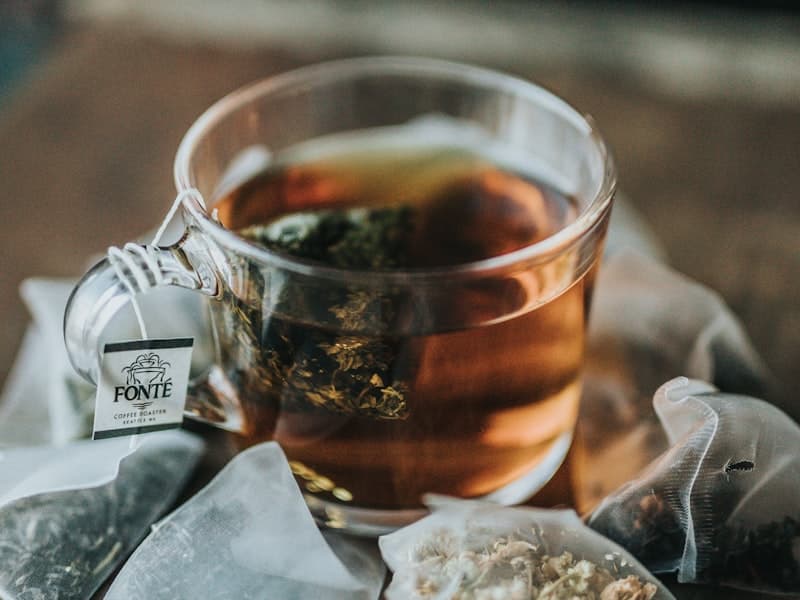
Any of these recipes can be enhanced with a bath tea — a large muslin bag or cloth drawstring pouch filled with dried herbs, steeped directly in the bathwater. This adds the water-soluble constituents of the herbs (polyphenols, mucilage, minerals) to the bath. Good herb-to-bath ratios:
1/2 to 1 cup of dried herbs per bath
Place in a muslin bag, tie closed, and hang under the running faucet so hot water flows through the herbs
After the tub fills, drop the bag into the bath and squeeze occasionally to release more color and constituents
Suggested herb combinations:
Calming: chamomile, lavender, lemon balm, oat straw
Muscle relief: dried arnica, eucalyptus leaves, rosemary, ginger root
Skin soothing: calendula, comfrey leaf, oatmeal, plantain
Respiratory: thyme, eucalyptus leaves, peppermint, pine needles
For detailed herb profiles and safety information, browse our Herb Library and our Essential Oil Library.
A 20-minute herbal bath is not an indulgence — it is one of the most accessible, evidence-supported forms of self-care available. The warm water, the aroma, and the herbs work together in a way that no supplement capsule can replicate.